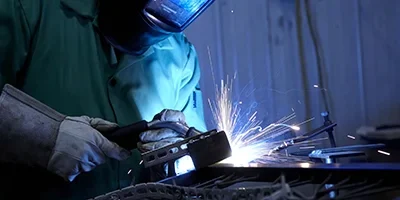

OUR CAPABILITIES QUALITY PRODUCTS, ON TIME, ON BUDGET

Our Capabilities Curved and Flat Tempered Glass, Engineered In-House

Auto Temp, Inc. is a curved and flat tempered glass manufacturer that handles every step of production under one roof, from engineering and tooling to final packaging. Our 200,000-square-foot facility runs five tempering and bending furnaces. Three HTBS furnaces produce flat, compound and cylindrical parts, and two CBTS furnaces take on complex bends that other suppliers turn away. Lean manufacturing, a skilled workforce and state-of-the-art equipment let us deliver quality products on time and on budget.
What glass fabrication services does Auto Temp offer?

  • in-house engineering and tooling support, from prototype to production
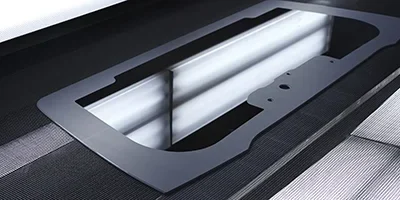
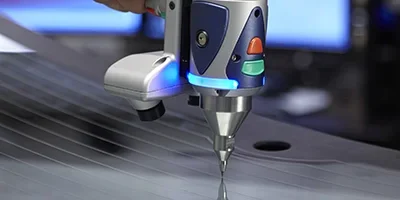
  • precision cutting, grinding and drilling for complex shapes
  • silkscreen glass printing, fired in before tempering so the image lasts
  • automotive glass tempering and bending
  • value-added assembly and prefabricated glass parts
  • warehousing, custom packaging and fast fulfillment

Every part is built to ISO 9001:2015, ANSI/SAE Z26.1, FMVSS 205 and ECE standards.

Lean manufacturing, a skilled workforce and state-of-the-art equipment let us deliver quality products on time and on budget.

Size and Bend Limits for Curved Tempered Glass

This is the first question that decides whether a part can be quoted, and the answer depends on which of two processes it needs.

Bending without tooling. Flat, cylindrical and compound parts are formed in the HTBS furnaces without dedicated tooling.

  • Minimum radius: 1,000 mm
  • Maximum size: 750 mm by 1,600 mm in 3.5 mm glass and heavier
  • Maximum size on the large shape bending line: 1,500 mm by 1,600 mm

Complex bending with tooling. Parts whose geometry cannot be produced without a form run in the CBTS furnaces, against tooling built in house.

  • Maximum depth of bend: 210 mm
  • Maximum size: 1,100 mm by 1,700 mm
  • Full press bending capability

Radius and depth of bend are not interchangeable. A part can sit comfortably inside the 1,000 mm radius and still be a tooled part because of how the curve runs, and a part can be well under 210 mm of depth and still need a form. Where a geometry sits close to either boundary, Auto Temp's engineers review the drawing and say which process applies rather than quoting against an assumption.

Quality Control

Our legendary “no excuses” commitment to quality keeps buyers coming back.

Engineering

Auto Temp’s team of veteran engineers will assist you every step of the way.

Tooling

Our in-house capabilities ensure consistent part quality and save customers time and resources.

Tempering & Bending
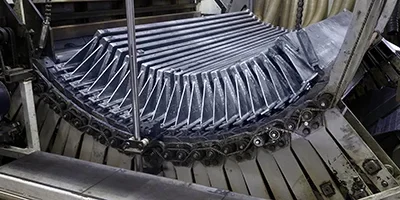
Auto Temp’s manufacturing facility is home to three HTBS furnaces for flat, compound and cylindrical bend applications and two CBTS furnaces to handle complex bends.

Warehousing Logistics
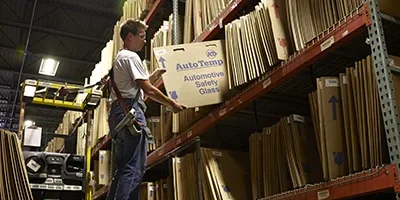
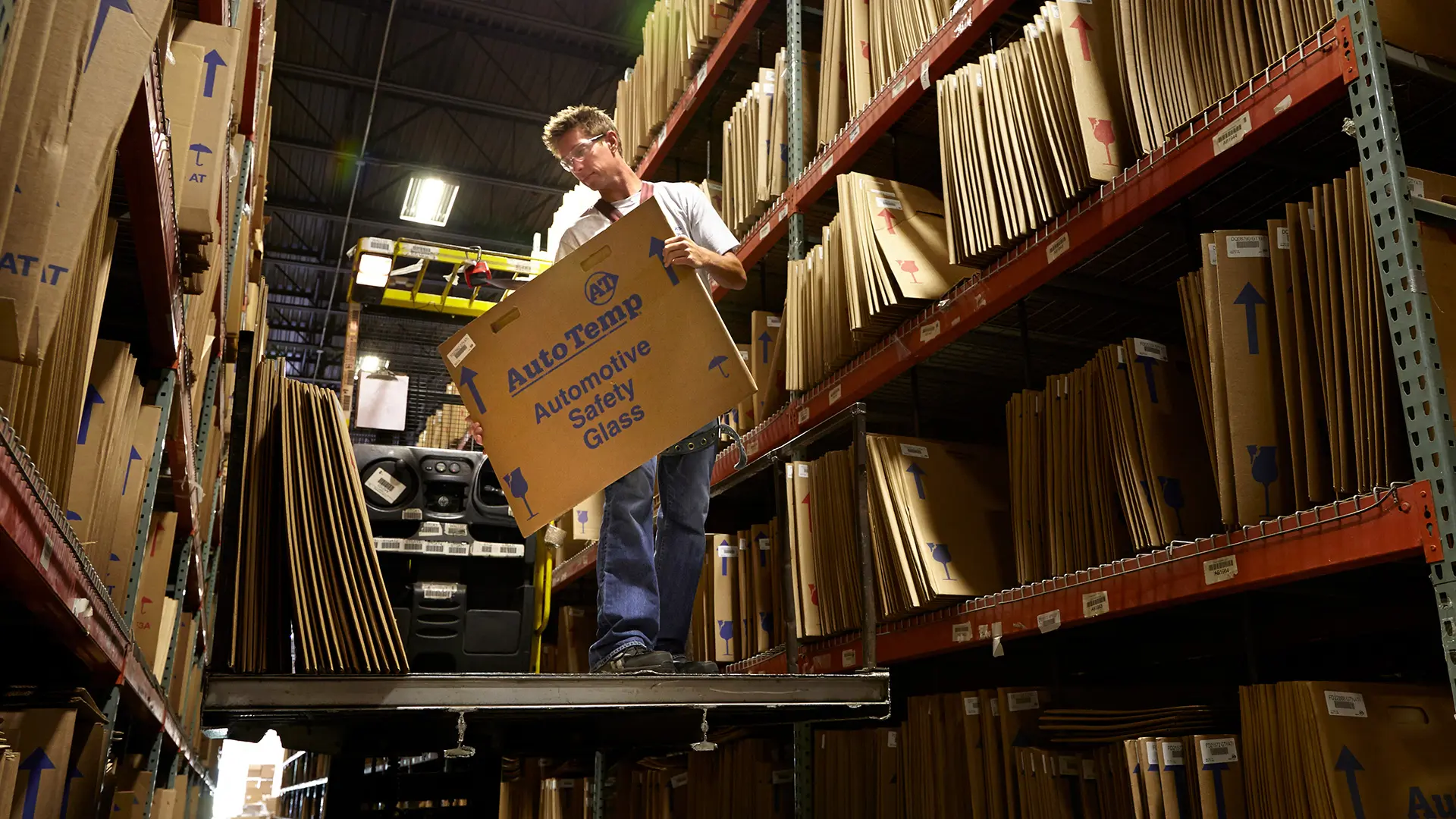
Our logistics team routinely handles challenging jobs that require specialized packaging for international export, contracting with carriers for truckload or less-than-truckload shipments, rapid fulfillment of small orders and more.

Cutting, Grinding and Drilling Tolerances

Fabrication happens before tempering. Once a part has been through the furnace it cannot be cut, ground or drilled, so every dimension, every edge finish and every hole has to be correct going in.

  • Three fully automatic Bystronic cut and grind lines
  • One Bando automatic cut and grind line
  • Two Hegla cutters
  • Two double head TAC drills
  • In-house CAD, producing the cutting program from the customer's drawing
  • Glass thickness from 3.5mm to 10.0mm
  • Thickness tolerance of plus zero, minus 0.03 inch

Fabrication is where a part's cost and its risk are both set. A shape that can be cut in one pass on an existing program costs less than one that cannot. A hole placed close to an edge raises the chance of breakage in the furnace, which shows up as yield rather than as a quality problem. Auto Temp's engineering review flags both at the drawing stage, when changing them is a conversation rather than a change order.

Silkscreen Printing on Tempered Glass

Ink is applied before the glass enters the furnace, so it fuses into the surface during heating rather than sitting on top of it. A printed border, logo or obscuration band on a tempered part is part of the glass. It will not wear off, peel or wash away over the life of the vehicle.

  • Two Thieme silkscreen machines
  • One in line Aisa unit
  • One TecGlass digital printer
  • Maximum print area of 1,600mm by 2,400mm
  • Black and silver double print
  • Resistance soldering in house, so a part needing terminals attached does not leave the plant to get them

Three things decide what is possible on a given part. The print area, which caps the size. Whether the design needs one color or two, since a double print is two passes and two drying stages. And whether the printed element is decorative or functional, because a heating element or an antenna has to be positioned against an electrical specification rather than a visual one.

Digital printing sits alongside the screen process rather than replacing it. Screen printing is the better answer at production volume and for conductive inks. Digital is the better answer for short runs, for prototypes, and for artwork that would be uneconomical to make a screen for.

Heated back windows are produced at production volume on this equipment.

Raw Glass Sourcing and Supply Continuity

Supply continuity is a procurement question rather than a manufacturing one, and it is a fair one to ask of any supplier whose own input comes from a handful of plants.

Auto Temp purchases raw glass from seven North American float facilities, in any color available in the market.

The number of facilities describes the shape of the risk. Float glass is made in large continuous plants that shut down for scheduled rebuilds every several years and occasionally for unscheduled reasons. A supplier drawing from one plant has a single point of failure. A supplier drawing from seven does not.

Continuity is managed rather than assumed:

  • Suppliers are approved and evaluated against performance
  • Tier 2 secondary suppliers are held for higher volume component parts
  • Tier 2 glass supplier relationships are maintained for contingent supply of tempered parts
  • Production capacity is deliberately held in reserve, so a volume increase or a recovery from disruption does not wait on new equipment


Hardware Bonding and Value-Added Assembly

A tempered part is often not the finished item a customer needs. It needs hinges, studs, brackets, trim or a seal bonded to it before it can go onto a line. Auto Temp does that work before the part ships.

Auto Temp bonds hardware as a production operation rather than a finishing step:

  • Two part epoxy urethane adhesive
  • Bonding to plastic, E coated metal and aluminum
  • Single sided and multi surface configurations
  • A standing inventory of more than 2,000 hardware applications
  • Parts shipped as prefabricated assemblies, packed to the customer's specification

Glass bonded at the plant that tempered it is bonded by people who know how the part behaves, and a bonding failure is caught before shipping rather than after delivery. It also removes a receiving, storing and reshipping step from the customer's own operation.

The standing hardware inventory is the part worth attention. Most parts can be assembled from stock rather than waiting on a hardware lead time, and an unusual requirement is often already covered.